


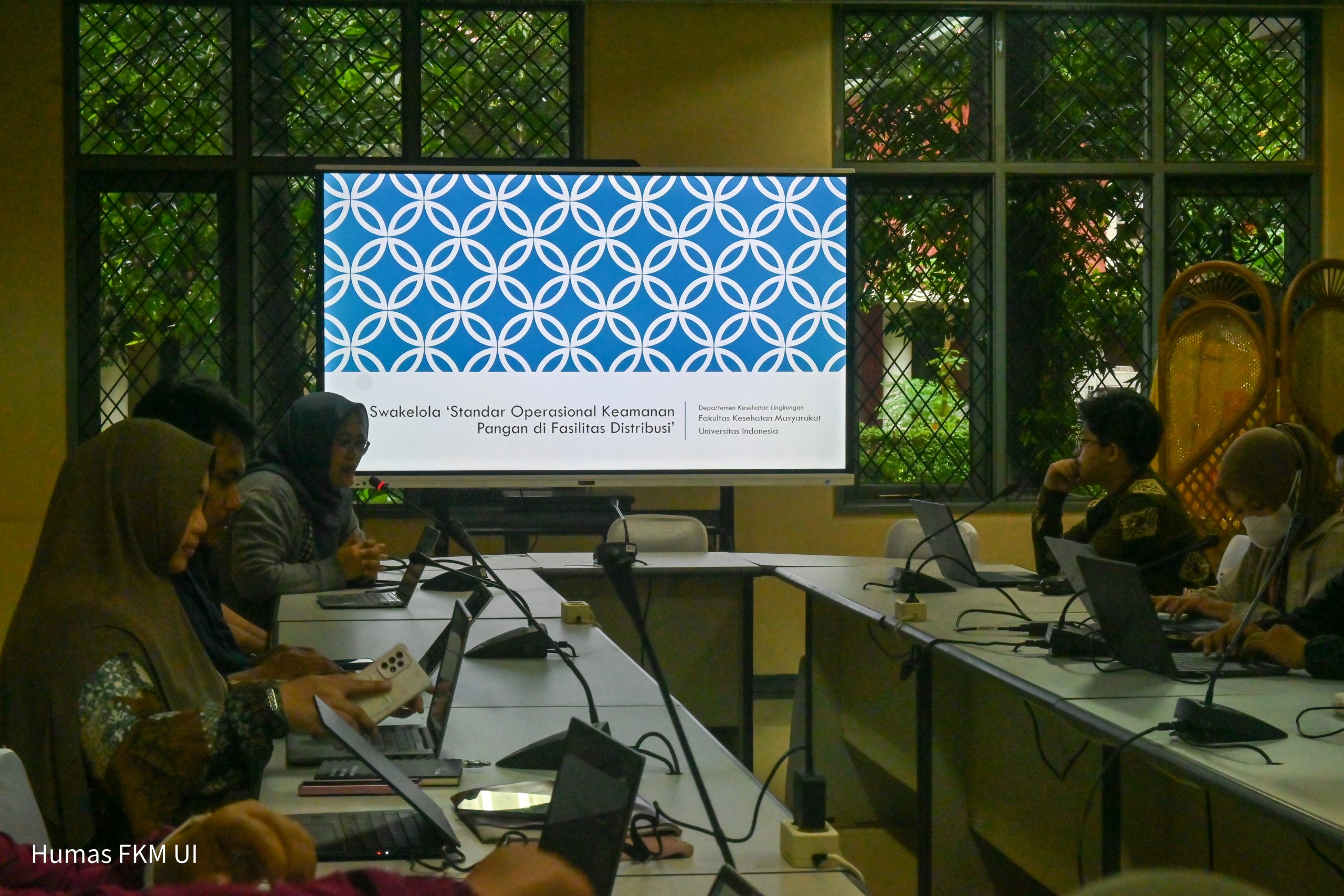
Depok, March 6, 2026 — The Faculty of Public Health (FPH) Universitas Indonesia (UI), through its Institute for Community Service and Engagement (LPPKM), once again organized a discussion forum for the finalization of a Type II Self-Management cooperation contract concerning the preparation of Norms, Standards, Procedures, and Policies (NSPK) related to operational food safety standards in distribution facilities and occupational safety and health policy recommendations at Nutrition Fulfillment Service Units (SPPG). The event, held at the Professor Meeting Room, Building G, FPH UI on March 6, 2026, brought together academics from the Department of Environmental Health and the Department of Occupational Health and Safety (OHS) of FPH UI, along with representatives from the National Nutrition Agency, namely Windari, Expert Staff of the Directorate of Governance, and the team, to discuss strengthening food safety guidelines and worker protection in SPPG operations. Previously, on March 5, 2026, a similar meeting had been conducted with a different focus, namely minimum operational standards and guidelines for the quality of nutritious food production at Nutrition Fulfillment Service Units (SPPG).
This meeting formed part of the finalization stage of the cooperation contract before the implementation of the NSPK preparation activities scheduled to take place from March 30 to June 30, 2026. The discussion focused not only on the administrative aspects of the cooperation contract but also on deepening the substance of the guidelines that will serve as references for implementing food safety and occupational safety measures in SPPG operations as large-scale food production and distribution centers.
In discussing environmental health aspects, the team from the Department of Environmental Health of FPH UI included the Head of the Department of Environmental Health FPH UI, Dr. Zakianis, S.K.M., M.K.M.; Fitri Kurniasari, S.K.M., M.K.K.K., Ph.D.; Dr. Budi Hartono, S.Si., M.K.M.; and Prof. Dr. drg. Ririn Arminsih Wulandari, M.Kes. The discussion emphasized that food safety is determined not only during the food processing stage but also throughout the distribution and serving processes.
Prof. Dr. drg. Ririn Arminsih Wulandari, M.Kes., stressed the importance of an environmental health approach in ensuring food safety throughout the entire food management chain. “Food produced under proper safety standards may still experience a decline in hygienic quality if post-production handling processes are not managed appropriately. Contamination may even arise not from the food itself, but from equipment, containers, or the environment in which the food is served,” stated Prof. Ririn.
Therefore, hygiene and sanitation aspects became major concerns, including food handlers’ behavior, production facility management, and food protection from potential environmental contamination. In practice, food safety control also needs to refer to the Hazard Analysis and Critical Control Points (HACCP) principles to ensure that each stage of the process has a clear monitoring mechanism.
In addition to environmental health aspects, the discussion also addressed the importance of occupational safety and health protection for workers involved in SPPG operations. drg. Baiduri Widanarko, M.K.K.K., Ph.D., Head of the Department of Occupational Health and Safety at FPH UI, together with the team consisting of Prof. Dr. Robiana Modjo, S.K.M., M.Kes.; Dr. Laksita Ri Hastiti, S.K.M., M.K.K.K.; and Dr. Eng. Stevan Deby Anbiya Muhamad Sunarno, S.K.M., M.K.K.K., explained that SPPG is a large-scale food production facility. Activities within SPPG involve various potential occupational hazards that need to be identified from the outset. “The occupational safety approach does not only focus on accident prevention, but also on how to create a safe and healthy working environment so that operational activities can run sustainably,” explained Dr. Baiduri.
Through this contribution, FPH UI is expected to support the strengthening of food safety policies as well as worker protection within Indonesia’s nutrition fulfillment service system. This effort also underscores that the success of nutrition fulfillment programs depends not only on the quality of the food produced, but also on how the food is safely produced, handled, and distributed. The guidelines currently being prepared are expected to serve as practical references for field implementers while also strengthening the implementation of more protected and impactful nutrition fulfillment programs for the community. (SHF)