

Depok, February 12, 2026 – Higher education environments encompass a wide range of activities with complex levels of risk, ranging from laboratory practicums to the large-scale management of campus facilities and assets. These conditions require a structured and sustainable Occupational Health and Safety (OHS) management system. In response to this need, the Faculty of Public Health (FPH) at Universitas Indonesia organized a series of events commemorating National OHS Month 2026 as a concrete step toward strengthening a reliable, professional, and collaborative OHS ecosystem within the university environment.
In her remarks, the Dean of FPH UI, Prof. Dr. Indri Hapsari Susilowati, S.K.M., M.K.K.K., emphasized that the event, themed “Building a Professional, Reliable, and Collaborative OHS Management Ecosystem in Higher Education,” aimed to instill OHS principles as an integral culture embedded in every academic activity. According to her, universities must become productive spaces while ensuring the safety and health of all members of the academic community. She also expressed appreciation for the participation of speakers from IPB University, Institut Teknologi Bandung, Universitas Gadjah Mada, and Universitas Diponegoro, along with internal experts from UI, as a form of inter-university collaboration to share best practices, strengthen standardization, and encourage more impactful national OHS research and policy synergy.
Similar appreciation was conveyed by the Vice Rector for Academic and Student Affairs of UI, Prof. Ir. Mahmud Sudibandriyo, M.Sc., Ph.D., who stressed that OHS is a crucial foundation in ensuring that the tridharma of higher education is carried out safely and healthily. “We fully realize the importance of building, maintaining, and improving the safety and health of the UI community, including students, educational staff, and lecturers at Universitas Indonesia. OHS is not only about fulfilling regulatory requirements, but also a fundamental business process in ensuring that tridharma activities are conducted safely and healthily to create an excellent and impactful UI campus,” said Prof. Mahmud.
OHS management is viewed not merely as regulatory compliance, but as part of the university’s strategic business process. In line with the theme of National OHS Month 2026, Universitas Indonesia continues to strengthen governance through the establishment of the Directorate of Campus Well-being, which oversees aspects of Health, Safety, Security, and Environment (HSSE). In addition, through Rector Regulation Number 26 of 2025, UI has established the Campus Well-being Management System (SMKK) as the policy foundation for implementing OHS across the university environment.
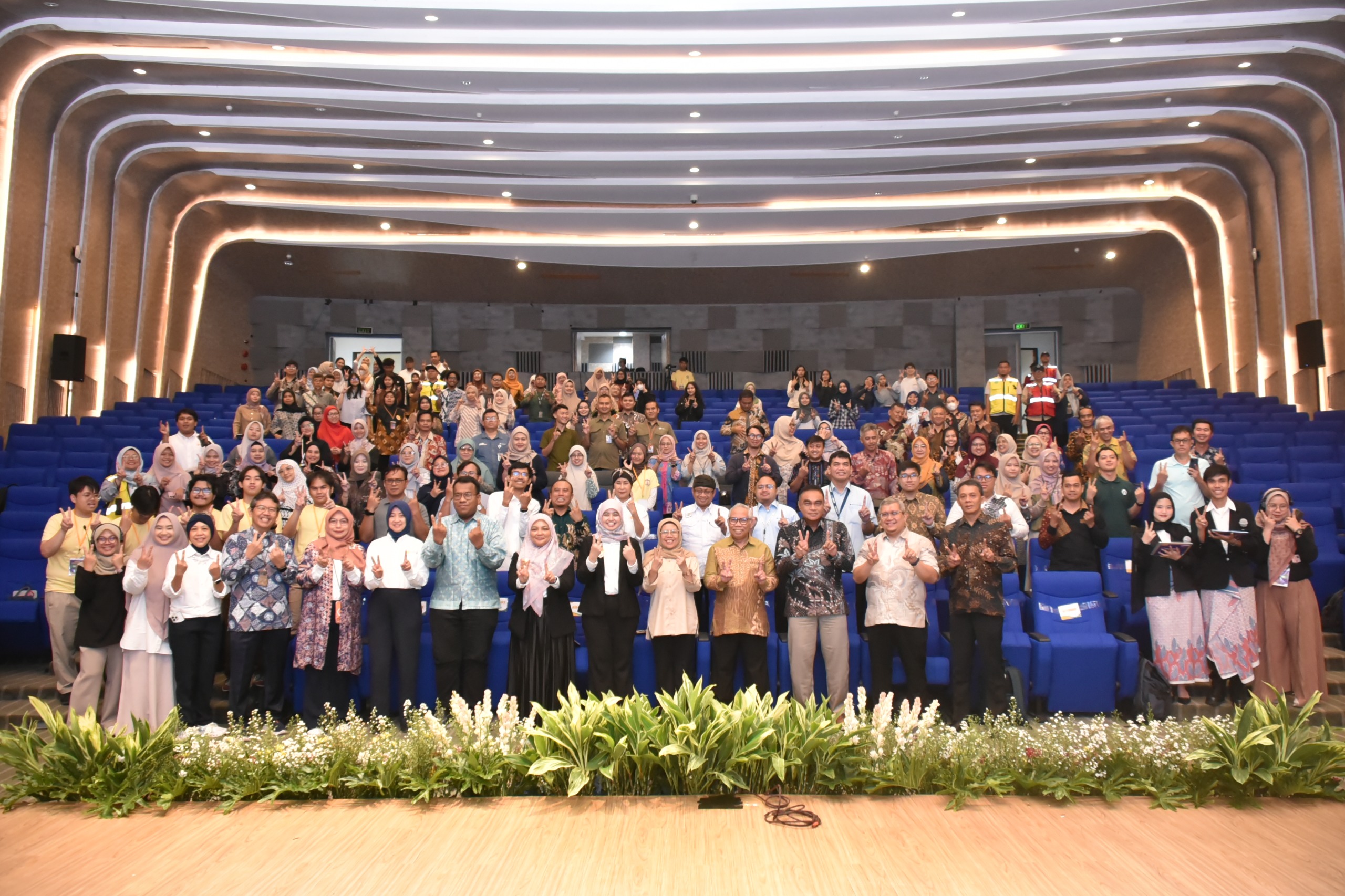
The event, centered at the Makara Art Center, marked the culmination of a series of prior activities, including several creative competitions. More than 200 participants from various faculties within UI as well as external institutions took part in competitions such as The Most Walker (group healthy walk), OHS creative video competition, OHS poster competition, and the best implementation achievement competition for the Campus Well-being Management System (SMKK).
The peak of the commemoration featured a national seminar presenting leading OHS experts and practitioners. In her keynote speech, Prof. Dr. Ir. Ikeu Tanziha, M.S., Expert Council Member of the National Nutrition Agency, emphasized that OHS is a strategic investment, particularly in supporting national priority programs such as the Free Nutritious Meals Program (MBG).
“OHS is not merely a regulatory obligation, but a long-term investment to protect workers while ensuring food safety. Optimal nutritional development requires healthy and safe working systems to realize the Golden Generation 2045,” stated Prof. Ikeu.
In line with this, Ir. Ismail Pakaya, M.E., Director General of Labor Inspection and OHS at the Indonesian Ministry of Manpower, highlighted the challenges of digital transformation and the impacts of climate change on the workforce. He encouraged universities to become pioneers in building a strong OHS culture.
“Universities have a strategic role in preparing work-ready graduates with adequate OHS competencies. The government provides regulations, while universities contribute through innovation and research to build a sustainable ecosystem,” he explained.
The seminar also featured a sharing session showcasing best practices in Environmental Health and Safety (EHS) management from five leading public universities. Various innovations were presented, ranging from the utilization of artificial intelligence technology through the predictive ITB HSE Web-Based App presented by Mugi Sugiarto, S.Si., MAB., from ITB, to the strengthening of risk-based governance through the Governance, Risk, and Compliance (GRC) framework presented by Ir. Budi Purwanto, M.E. from IPB University.
Sustainability approaches were also highlighted through the concept of the circular economy presented by Dr. Bina Kurniawan, S.K.M., M.Kes from Universitas Diponegoro. UI’s transformation toward the Campus Well-being Management System (SMKK) was explained by Yuni Kusminanti, S.K.M., M.Si., to ensure the well-being of the entire academic community. A holistic perspective was shared by Hendricus Sujatmiko, S.T. from UGM, who emphasized the integration of occupational environmental health standards, hazardous waste management, and ergonomic office principles in creating a safe and productive campus.
Closing the inter-university discussion session, Prof. dra. Fatma Lestari, M.Si., Ph.D., OHS expert from FPH UI, summarized the strategic direction for OHS development in academia. She stressed that the transformation toward an integrated EHS system has become inevitable.
“The transformation of EHS in higher education is no longer an option, but a necessity. Digitalization through Smart EHS, the use of AI monitoring, and the integration of risk-based management across all tridharma activities are trends that continue to strengthen,” said Prof. Fatma.
The importance of cross-institutional collaboration was also emphasized to ensure the sustainability of OHS implementation on campus. Strengthening national and international EHS forums among universities was considered essential through benchmarking and the integration of EHS, security, and risk management to create campuses that are not only physically safe but also supportive of the holistic well-being of the academic community.
On the same occasion, Prof. Doni Hikmat Ramdhan, S.K.M., M.K.K.K., Ph.D., added that although the foundations of OHS in higher education have been firmly established through management commitment, infrastructure certification, and digitalization, future challenges will increasingly focus on individual well-being. Strengthening leadership and collective awareness will become key factors in creating campuses that are physically and psychologically healthy.
The successful implementation of National OHS Month 2026 at FPH UI was supported by collaboration with various strategic partners. FPH UI expressed appreciation to the National Nutrition Agency, PT Adhi Karya Persero (Tbk), PT Pertamina, Petrolab Services, Human Factors Indonesia, Indonesian Industrial Hygiene Association (IIHA), PT Vale, MMC Hospital, Arsiare, BSI, PT Hutama Karya Persero, and PT Telkom for their support and synergy.
This cross-sector involvement reaffirms that strengthening OHS culture within educational institutions is a shared responsibility in developing excellent, healthy, and safe human resources. (DP)